Streetwear's Evolution: From Counterculture to High Fashion
The Origins of Streetwear: An Urban Revolution
Streetwear, with its unapologetic edge, has long served as a sartorial manifesto for urban youth. Emerging from the rebellious subcultures of the 1970s and 1980s, it drew inspiration from diverse sources like skateboarding, punk rock, and hip-hop. Often seen as a means of personal expression, streetwear was initially a reaction against mainstream fashion. Pioneers like Shawn Stussy, who started by scrawling his signature on surfboards and later T-shirts, catalyzed the rise of this cultural phenomenon.
Key Influences and Iconic Brands
With its roots planted firmly in the streets, streetwear brands like Supreme, A Bathing Ape, and Adidas capitalized on the embrace of popular culture in the 1990s. These brands crafted a new identity, replete with bold graphics, logos, and limited releases, thus awakening an industry that celebrated exclusivity through scarcity. The allure of streetwear was its rejection of conformity, with brands like Off-White, founded by Virgil Abloh, blurring the lines between fashion, art, and culture.
- Supreme: A symbol of exclusivity, known for its collabs with luxury houses like Louis Vuitton.
- A Bathing Ape: Melded Japanese pop culture with Western streetwear aesthetics.
- Adidas: From Run-D.M.C. to Kanye West's Yeezy line, a legacy of cultural impact.
The High Fashion Embrace: Streetwear in the Limelight
The 21st century has witnessed streetwear's seamless integration into high fashion, transcending its rebellious beginnings. Luxury brands, once dismissive of streetwear's raw aesthetics, have now incorporated its essence into their collections. This shift has heralded collaborative projects between streetwear leaders and high-end labels—a testament to streetwear's undisputed influence. Infamous collaborations, like Gucci x North Face and Balenciaga's street-inspired collections, illustrate this symbiotic partnership.
The Role of Social Media and Street Style
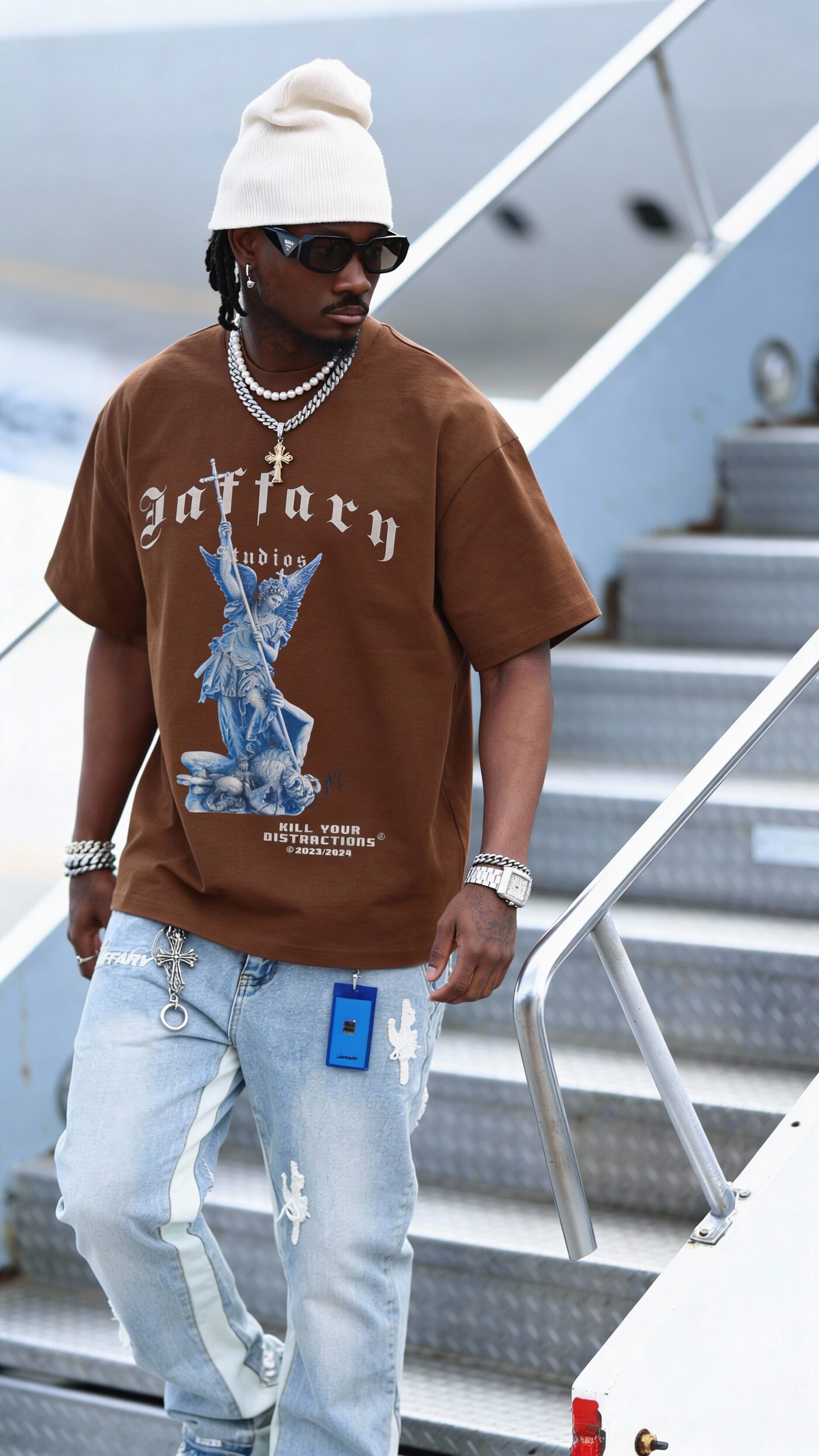
Platforms like Instagram and TikTok have accelerated streetwear's evolution, offering real-time visibility into the latest trends. Influencers and fashion enthusiasts document street style across global cities, inspiring a digital-first approach to fashion consumption. Digital platforms have democratized style, allowing brands like Jaffary Studios to engage directly with consumers, embodying their motto 'K!LL Your Distractions' by focusing on crafting timeless, distraction-free designs.
The Current Landscape: Streetwear in 2026
As we navigate July 2026, the streetwear landscape continues to innovate and evolve. Sustainability and inclusivity are at the forefront, with brands committing to eco-conscious materials and diverse representation. Jaffary Studios, based in Amsterdam, epitomizes this progression, seamlessly weaving luxury with street sensibility in their collections. Today, streetwear's blend of comfort and authenticity redefines contemporary luxury.
Trend Forecast: What's Next for Streetwear
Looking forward, the fusion of technology and fashion remains pivotal. Smart fabrics, AI-driven designs, and virtual try-ons may dominate the industry, yet the essence of streetwear remains anchored in culture and community. As streetwear continues to pave the runway of high fashion, brands and consumers alike are invited to shop all styles and participate in this dynamic fashion narrative.
The journey of streetwear is a testament to fashion's power to adapt and redefine itself. From its counterculture roots to luxury's embrace, streetwear has carved an indelible mark on the world of fashion. At Jaffary Studios, the spirit of streetwear lives on, embracing the future while honoring its past—a true testament to its enduring appeal and potential for timeless impact.
As the adage goes: fashion is fleeting, but style is eternal—a mantra that streetwear embodies, proving its worth time and again on streets and runways alike.