Capturing Streetwear Fab: Art and Influences in Fashion Photography
The Evolution of Fashion Photography
In today's fashion realm, where digital imagery reigns supreme, the evolution of fashion photography has never been more vital. As June 2026 unveils new trends, the convergence of photography with the luxury streetwear industry offers an exciting narrative, vividly capturing every style shift. Historically, fashion photography has perpetually mirrored the zeitgeist—it's a canvas imprinted with high fashion's sophistication blended with cultural undercurrents from streetwear.
Pioneers and Their Impact
The origins trace back to icons like Richard Avedon and Helmut Newton whose work continues to influence modern narratives. Their evocative storytelling paved the pathway for today’s visual culture, melding art with the grandeur of the runway.
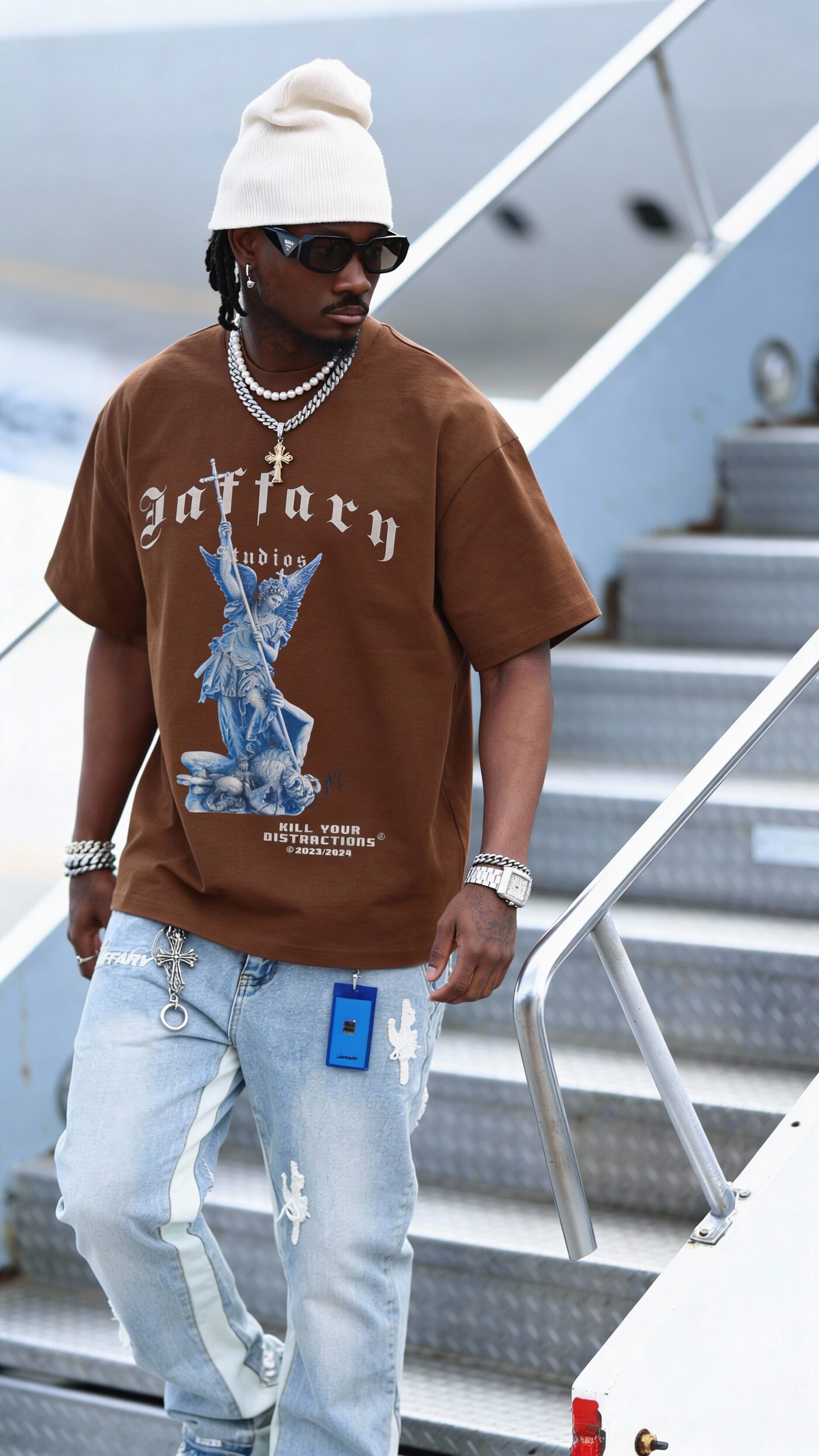
Contemporary photographers such as Petra Collins and Tyler Mitchell have taken the baton forward. Their approach embraces the spirit of urban culture, emphasizing diversity and authenticity—a core tenet of brands like Jaffary Studios, who champion reducing noise to focus on the richness of the moment, as their motto 'K!LL Your Distractions' suggests.
Current Trends and Techniques
Now more than ever, fashion photography transcends mere aesthetic—it's an immersive experience. This year sees a resurgence of analog photography techniques, invoking nostalgia while incorporating modern twists. The blend of low-fi and high-tech has found its place in the streetwear sector, enhancing the gritty realism synonymous with the urban fashion narrative.
Streetwear's Authentic Aesthetic
Brands like Jaffary Studios have pushed this aesthetic further, allowing monochrome palettes and natural settings to convey pure fashion art. This approach aligns with the increasing consumer desire for authentic, unfiltered visuals. Shows like Paris Fashion Week and Berlin's cutting-edge photoshoots are ditching excessive edits for raw captures that speak the truth of the fashion ethos.
Cultural References and Influences
The urban streetwear movement continuously draws inspiration from eclectic cultural references. Today's photographers tap into these veins, mapping a global tapestry that reflects varied influences—from the vibrance of Harlem to Tokyo's tech-driven fashion frontier.
The Role of Collaborations
The collaborative spirit remains a cornerstone of this industry, as seen through collaborations between fashion houses and global icons. A recent example includes Jaffary Studios partnering with digital influencers across Amsterdam, allowing fashion photography to explore storytelling beyond visual boundaries.
Apart from these heavyweight collaborations, smaller scale enterprises have significantly shaped the streetwear fashion scene in 2026 by nurturing local talent and cultural nuances. These perspectives add a genuine layer of engagement, resonating deeply with a wider audience.
- Embrace diverse settings: From urban backdrops to natural landscapes.
- Leverage technology: Use augmented reality to enrich storytelling.
- Champion diversity: Authentically represent global narratives.
To see various styles in action, feel free to shop all styles and witness fashion photography's influence firsthand.
The future of fashion photography lies in this symbiotic dance between art and culture, continuously renewed by the dynamic nature of streetwear. As we progress further into 2026, this genre continues to blur boundaries, captivating audiences with its riveting visuals that transcend traditional fashion norms.
Conclusion
Fashion photography is more than an artistic endeavor; it's a transformative language shaping society's sartorial expression. In merging the sophistication of luxury with the raw cultural depths of streetwear, brands like Jaffary Studios pioneer a narrative where each image encapsulates a moment of focused brilliance. Whether the appeal lies in the simplicity of cinematics or the vividness of its subject, fashion photography in this era continues to 'K!LL Your Distractions'—inviting us to lose ourselves in the layers of imagery, one frame at a time.